
Introduction to Nano Silicon Dioxide: A Crucial Nanomaterial for Advanced Technologies
Nano silicon dioxide (nano-SiO ₂), additionally referred to as nanosilica, has emerged as a foundation material in contemporary scientific research and engineering due to its remarkable physicochemical residential or commercial properties. With bit sizes commonly listed below 100 nanometers, nano-SiO ₂ shows high surface, thermal stability, mechanical toughness, and tunable reactivity. These attributes make it crucial across a wide spectrum of sectors– from electronic devices and medication to building and energy storage. As nanotechnology continues to develop, nano-SiO ₂ is playing a progressively vital role in enabling next-generation products and devices with enhanced efficiency and sustainability.
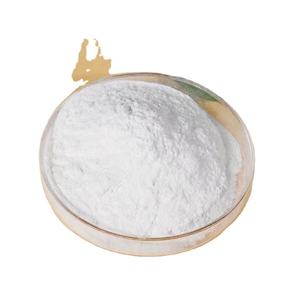
(Nano Silicon Dioxide)
Architectural Features and Synthesis Methods
Nano silicon dioxide exists in numerous morphologies consisting of round fragments, mesoporous structures, and core-shell configurations, each offering distinctive useful benefits. It is synthesized with methods such as sol-gel processing, chemical vapor condensation, fire pyrolysis, and precipitation from silica forerunners like tetraethyl orthosilicate (TEOS). Surface modification strategies– such as silanization– are commonly used to enhance dispersibility and compatibility with organic matrices. Exact control over fragment dimension, porosity, and surface area chemistry enables tailored applications in finishings, compounds, drug delivery systems, and electronic components.
Practical Roles in Material Support and Composite Design
One of the most impactful uses of nano-SiO two hinges on composite products, where it acts as an enhancing representative to enhance mechanical stamina, hardness, and abrasion resistance. When integrated into polymers, porcelains, or steels, nano-SiO ₂ boosts tons transfer in between stages, reduces split propagation, and enhances wear resistance. In epoxy materials and rubber compounds, it enhances tensile strength and thermal security. In addition, nano-SiO two is utilized in self-cleaning surface areas and anti-fouling finishes as a result of its hydrophilic nature and photocatalytic task under UV exposure. These abilities are driving technology in aerospace, automotive, and aquatic markets.
Applications in Electronic Devices and Semiconductor Innovation
In the electronics sector, nano silicon dioxide plays a dual function as both an architectural and practical product. It works as a gateway dielectric in thin-film transistors and as a passivation layer in semiconductor devices due to its exceptional insulating homes and compatibility with silicon substratums. In microelectromechanical systems (MEMS) and nanoelectronics, nano-SiO two is used in insulation layers, interconnects, and sensing unit components. Furthermore, its capability to be formed at the nanoscale sustains developments in photonic crystals, quantum dots, and incorporated optical circuits. These applications emphasize its significance in miniaturized, high-performance electronic systems.
Payments to Biomedical and Drug Innovations
Nano-SiO two has found significant application in biomedicine, especially in drug distribution, diagnostics, and imaging. Its high area permits reliable loading of healing agents, while surface area functionalization enables targeted launch mechanisms. Mesoporous silica nanoparticles (MSNs), a subdivision of nano-SiO two, are widely studied for regulated medicine delivery and gene treatment because of their uniform pore frameworks and biocompatibility. Furthermore, nano-SiO two is used in biosensors, oral composites, and antimicrobial coverings. Ongoing research concentrates on boosting biodegradability and lessening long-term toxicity to make sure risk-free professional implementation.
Duty in Sustainable Power and Environmental Technologies

( Nano Silicon Dioxide)
The power and environmental markets are leveraging nano-SiO two for enhanced battery performance, solar cell efficiency, and air pollution reduction. In lithium-ion batteries, nano-SiO ₂ is used as a binder and conductive additive to maintain silicon-based anodes, which deal with volume growth during cycling. It also enhances electrolyte stability and charge-discharge efficiency. In photovoltaics, nano-SiO ₂ functions as an antireflective finishing and encapsulation product to safeguard solar cells from wetness and degradation. Furthermore, it is utilized in catalysis and filtering membranes for CO two capture, water filtration, and air high quality improvement, straightening with global sustainability goals.
Market Trends and Industrial Adoption Dynamics
The global market for nano silicon dioxide is experiencing durable development, driven by increasing need from electronics, health care, and progressed manufacturing industries. Principal are investing heavily in scalable manufacturing modern technologies and surface-engineered variants to fulfill application-specific demands. Asia-Pacific leads in manufacturing ability, followed carefully by The United States and Canada and Europe. However, challenges remain concerning cost-effectiveness, governing conformity, and reproducibility of material properties. Strategic partnerships in between academia, market, and government agencies are speeding up standardization efforts and business adoption.
Challenges and Poisoning Considerations
In spite of its widespread usage, nano-SiO ₂ provides specific wellness and environmental worries that require cautious examination. Inhalation of fine particulates might pose breathing threats, requiring stringent dealing with procedures and job-related safety measures. Long-term biocompatibility research studies are continuous, especially for biomedical applications. From an industrial standpoint, pile problems and dispersion stability in complicated matrices can impact performance uniformity. Dealing with these challenges entails optimizing particle morphology, creating safer-by-design methods, and applying lifecycle analyses to guarantee accountable use throughout industries.
Future Outlook: Combination with AI, Quantum, and Smart Solution
Looking ahead, nano silicon dioxide is poised to play an essential role in emerging technical frontiers. Developments in man-made intelligence-driven products discovery will increase the layout of nano-SiO two-based compounds with enhanced properties. Integration with quantum computing styles– where SiO ₂ works as an ultra-pure dielectric– is opening new pathways in qubit stabilization. Furthermore, clever products including responsive nano-SiO two layers are being developed for flexible optics, self-healing layers, and real-time architectural tracking systems. As nanotechnology converges with digital and sustainable growth objectives, nano-SiO ₂ will continue to be a key enabler of high-tech advancement.
TRUNNANO is a supplier of Nano Silicon Dioxide with over 12 years of experience in nano-building energy conservation and nanotechnology development. It accepts payment via Credit Card, T/T, West Union and Paypal. Trunnano will ship the goods to customers overseas through FedEx, DHL, by air, or by sea. If you want to know more about Nano Silicon Dioxide, please feel free to contact us and send an inquiry(sales5@nanotrun.com). Tags:silicon dioxide nanopowder,nano silicon dioxide,sio2 gel
All articles and pictures are from the Internet. If there are any copyright issues, please contact us in time to delete.
Inquiry us