
Intro to Concrete Early Stamina Agents: Making It Possible For Faster, Stronger Infrastructure Development
Concrete early stamina agents (ESAs) are chemical admixtures developed to speed up the hydration procedure of concrete, allowing concrete to get mechanical toughness at a considerably much faster price during its preliminary setting stages. In time-sensitive construction projects– such as bridge decks, tunnel linings, airport paths, and skyscrapers– these representatives contribute in reducing formwork removal times, accelerating building and construction schedules, and improving job effectiveness. As international framework demands grow and sustainability becomes progressively vital, early toughness representatives supply an engaging option for enhancing both performance and product performance in contemporary concrete technology.
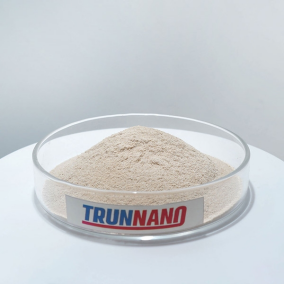
(Concrete Early Strength Agent)
Chemical Make-up and Category of Very Early Toughness Brokers
Early stamina representatives can be generally categorized into inorganic salts, organic substances, and composite types based on their chemical nature. Usual not natural ESAs include calcium chloride, sodium nitrite, and sodium sulfate, which promote rapid hydration by decreasing the induction duration of concrete minerals. Organic ESAs, such as triethanolamine and formates, function by changing the surface area fee of cement bits and improving nucleation sites. Composite ESAs integrate numerous active ingredients to maximize early-age efficiency while reducing adverse effects like deterioration or postponed setup. Each type offers special benefits depending on application requirements, ecological conditions, and compatibility with various other admixtures.
System of Activity: Just How Early Toughness Representatives Boost Concrete Efficiency
The essential system of early toughness agents depends on their capacity to speed up the hydration responses of tricalcium silicate (C3S) and dicalcium silicate (C2S), the main components in charge of concrete strength development. By minimizing the induction period and increasing the rate of calcium silicate hydrate (C-S-H) gel development, ESAs enable earlier stiffening and hardening of the concrete paste. Furthermore, some agents lower the freezing factor of pore water, making them especially efficient in cold-weather concreting. Advanced formulations also enhance microstructure densification, resulting in improved early compressive toughness, decreased shrinkage, and improved resistance to environmental stress factors.
Applications Throughout Building And Construction and Framework Sectors
Early toughness representatives are crucial in a large range of building situations where rapid strength gain is crucial. In precast concrete production, they enable much shorter demolding cycles and boosted production throughput. In winter months building and construction, ESAs prevent freeze damage by enabling very early frost resistance. Their use is likewise prevalent in emergency repair work, such as highway patching and train track slab reconstruction, where fast return-to-service times are vital. Additionally, in high-performance concrete systems integrating supplemental cementitious products like fly ash or slag, ESAs make up for slower early-age reactivity, ensuring architectural preparedness without jeopardizing long-term longevity.
Market Patterns and Technological Dope
The market for very early stamina agents is broadening in reaction to expanding demand for fast-track building and resilient infrastructure. Technical innovations have brought about the growth of non-chloride ESAs that avoid steel support rust, resolving one of the major limitations of traditional chloride-based agents. Advancements such as nano-enhanced ESAs and clever release systems are being discovered to improve dosage effectiveness and control hydration kinetics. Furthermore, electronic assimilation– with real-time monitoring and predictive modeling– is enhancing the accuracy of ESA applications in complex engineering atmospheres. These patterns mirror a more comprehensive change toward safer, smarter, and more lasting construction methods.
Environmental and Resilience Obstacles
Regardless of their benefits, early strength agents deal with challenges pertaining to long-term toughness and ecological impact. Chloride-containing ESAs, while cost-efficient, pose risks of strengthening steel rust if made use of improperly. Some natural ESAs may present unstable components or change the setup actions unpredictably. From an eco-friendly point of view, there is enhancing analysis over the life-cycle influence of chemical admixtures, motivating research study into naturally degradable and low-carbon alternatives. In addition, incorrect dose or incompatibility with other ingredients can result in problems such as efflorescence, splitting, or minimized service life. Attending to these worries calls for mindful formula style, rigorous testing, and adherence to developing regulatory standards.
Future Outlook: Toward Smart, Sustainable, and High-Performance Solutions
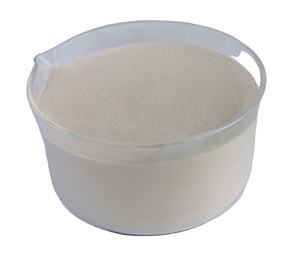
( Concrete Early Strength Agent)
Looking ahead, the evolution of early toughness agents will certainly be driven by sustainability, performance optimization, and technical convergence. Breakthroughs in nanotechnology are making it possible for the growth of ultra-fine, highly reactive ESAs that enhance very early stamina without jeopardizing later-age buildings. Environment-friendly chemistry approaches are promoting the production of bio-based accelerators originated from eco-friendly feedstocks, lining up with circular economy goals. Combination with wise construction modern technologies– such as IoT-enabled treating sensing units and AI-driven admixture forecast models– will additionally refine the use of ESAs in vibrant building settings. As environment resilience and carbon reduction become central to framework preparation, very early strength agents will play an essential function in shaping the next generation of high-performance, quickly deployable concrete remedies.
Distributor
Cabr-Concrete is a supplier under TRUNNANO of Concrete Admixture with over 12 years of experience in nano-building energy conservation and nanotechnology development. It accepts payment via Credit Card, T/T, West Union and Paypal. TRUNNANO will ship the goods to customers overseas through FedEx, DHL, by air, or by sea. If you are looking for cement accelerator, please feel free to contact us and send an inquiry. (sales@cabr-concrete.com) Tags: Concrete Early Strength Agent, concrete, concrete addtives
All articles and pictures are from the Internet. If there are any copyright issues, please contact us in time to delete.
Inquiry us