
1. Synthesis, Structure, and Basic Residences of Fumed Alumina
1.1 Production Mechanism and Aerosol-Phase Formation
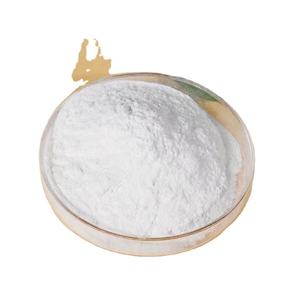
(Fumed Alumina)
Fumed alumina, likewise called pyrogenic alumina, is a high-purity, nanostructured kind of aluminum oxide (Al ₂ O FOUR) produced via a high-temperature vapor-phase synthesis procedure.
Unlike traditionally calcined or sped up aluminas, fumed alumina is generated in a flame activator where aluminum-containing forerunners– typically light weight aluminum chloride (AlCl four) or organoaluminum substances– are ignited in a hydrogen-oxygen fire at temperatures going beyond 1500 ° C.
In this extreme atmosphere, the precursor volatilizes and goes through hydrolysis or oxidation to create aluminum oxide vapor, which rapidly nucleates into main nanoparticles as the gas cools.
These inceptive fragments collide and fuse together in the gas phase, forming chain-like aggregates held together by solid covalent bonds, resulting in a highly permeable, three-dimensional network framework.
The entire process happens in a matter of milliseconds, yielding a fine, fluffy powder with phenomenal pureness (often > 99.8% Al ₂ O ₃) and minimal ionic impurities, making it appropriate for high-performance commercial and electronic applications.
The resulting material is gathered using filtering, usually utilizing sintered metal or ceramic filters, and afterwards deagglomerated to varying levels depending on the desired application.
1.2 Nanoscale Morphology and Surface Chemistry
The defining features of fumed alumina depend on its nanoscale design and high specific area, which normally varies from 50 to 400 m ²/ g, depending on the manufacturing problems.
Main fragment dimensions are normally between 5 and 50 nanometers, and as a result of the flame-synthesis system, these fragments are amorphous or show a transitional alumina phase (such as γ- or δ-Al Two O THREE), rather than the thermodynamically steady α-alumina (corundum) phase.
This metastable structure adds to higher surface area reactivity and sintering activity compared to crystalline alumina forms.
The surface of fumed alumina is rich in hydroxyl (-OH) groups, which emerge from the hydrolysis action throughout synthesis and subsequent direct exposure to ambient wetness.
These surface hydroxyls play an important role in establishing the product’s dispersibility, reactivity, and communication with natural and inorganic matrices.

( Fumed Alumina)
Relying on the surface therapy, fumed alumina can be hydrophilic or rendered hydrophobic via silanization or various other chemical adjustments, enabling tailored compatibility with polymers, materials, and solvents.
The high surface energy and porosity also make fumed alumina an outstanding prospect for adsorption, catalysis, and rheology alteration.
2. Practical Functions in Rheology Control and Dispersion Stablizing
2.1 Thixotropic Behavior and Anti-Settling Systems
One of one of the most technically significant applications of fumed alumina is its ability to customize the rheological homes of fluid systems, especially in finishings, adhesives, inks, and composite materials.
When distributed at low loadings (typically 0.5– 5 wt%), fumed alumina forms a percolating network with hydrogen bonding and van der Waals communications between its branched aggregates, imparting a gel-like framework to otherwise low-viscosity liquids.
This network breaks under shear tension (e.g., during brushing, splashing, or mixing) and reforms when the anxiety is eliminated, a behavior known as thixotropy.
Thixotropy is vital for protecting against sagging in vertical coatings, inhibiting pigment settling in paints, and preserving homogeneity in multi-component solutions during storage.
Unlike micron-sized thickeners, fumed alumina achieves these results without substantially boosting the general viscosity in the applied state, protecting workability and end up high quality.
In addition, its not natural nature ensures lasting stability against microbial destruction and thermal disintegration, outperforming lots of natural thickeners in harsh atmospheres.
2.2 Diffusion Methods and Compatibility Optimization
Attaining consistent diffusion of fumed alumina is vital to optimizing its practical performance and avoiding agglomerate problems.
Due to its high surface area and strong interparticle forces, fumed alumina often tends to develop hard agglomerates that are tough to damage down making use of conventional mixing.
High-shear mixing, ultrasonication, or three-roll milling are frequently employed to deagglomerate the powder and integrate it right into the host matrix.
Surface-treated (hydrophobic) qualities display much better compatibility with non-polar media such as epoxy resins, polyurethanes, and silicone oils, lowering the power required for diffusion.
In solvent-based systems, the selection of solvent polarity must be matched to the surface chemistry of the alumina to guarantee wetting and stability.
Proper dispersion not only improves rheological control however also boosts mechanical reinforcement, optical clarity, and thermal stability in the last composite.
3. Reinforcement and Practical Improvement in Composite Products
3.1 Mechanical and Thermal Home Improvement
Fumed alumina functions as a multifunctional additive in polymer and ceramic composites, contributing to mechanical reinforcement, thermal security, and barrier homes.
When well-dispersed, the nano-sized bits and their network structure restrict polymer chain wheelchair, boosting the modulus, hardness, and creep resistance of the matrix.
In epoxy and silicone systems, fumed alumina boosts thermal conductivity a little while dramatically boosting dimensional security under thermal cycling.
Its high melting point and chemical inertness permit compounds to keep stability at elevated temperatures, making them ideal for digital encapsulation, aerospace parts, and high-temperature gaskets.
Additionally, the dense network created by fumed alumina can work as a diffusion obstacle, lowering the leaks in the structure of gases and moisture– helpful in safety coverings and packaging materials.
3.2 Electric Insulation and Dielectric Efficiency
In spite of its nanostructured morphology, fumed alumina keeps the superb electrical shielding buildings characteristic of aluminum oxide.
With a volume resistivity going beyond 10 ¹² Ω · cm and a dielectric toughness of several kV/mm, it is commonly used in high-voltage insulation materials, consisting of cable television discontinuations, switchgear, and published motherboard (PCB) laminates.
When incorporated into silicone rubber or epoxy materials, fumed alumina not just strengthens the material however also helps dissipate heat and suppress partial discharges, enhancing the durability of electric insulation systems.
In nanodielectrics, the user interface in between the fumed alumina particles and the polymer matrix plays an important function in trapping cost providers and modifying the electric area circulation, causing boosted break down resistance and minimized dielectric losses.
This interfacial engineering is a vital focus in the advancement of next-generation insulation materials for power electronics and renewable resource systems.
4. Advanced Applications in Catalysis, Polishing, and Emerging Technologies
4.1 Catalytic Support and Surface Sensitivity
The high surface area and surface area hydroxyl density of fumed alumina make it an effective assistance product for heterogeneous stimulants.
It is made use of to disperse energetic metal types such as platinum, palladium, or nickel in responses including hydrogenation, dehydrogenation, and hydrocarbon reforming.
The transitional alumina phases in fumed alumina provide a balance of surface level of acidity and thermal security, assisting in solid metal-support communications that avoid sintering and enhance catalytic task.
In ecological catalysis, fumed alumina-based systems are used in the elimination of sulfur compounds from gas (hydrodesulfurization) and in the decay of unstable natural compounds (VOCs).
Its ability to adsorb and trigger molecules at the nanoscale user interface placements it as an appealing candidate for environment-friendly chemistry and lasting process engineering.
4.2 Precision Polishing and Surface Ending Up
Fumed alumina, particularly in colloidal or submicron processed types, is used in precision brightening slurries for optical lenses, semiconductor wafers, and magnetic storage space media.
Its consistent particle dimension, managed hardness, and chemical inertness make it possible for great surface do with very little subsurface damages.
When combined with pH-adjusted services and polymeric dispersants, fumed alumina-based slurries accomplish nanometer-level surface area roughness, vital for high-performance optical and electronic parts.
Arising applications consist of chemical-mechanical planarization (CMP) in sophisticated semiconductor manufacturing, where specific material elimination rates and surface area harmony are critical.
Past typical usages, fumed alumina is being explored in power storage, sensing units, and flame-retardant materials, where its thermal stability and surface functionality offer distinct advantages.
To conclude, fumed alumina represents a merging of nanoscale design and practical versatility.
From its flame-synthesized origins to its functions in rheology control, composite support, catalysis, and precision production, this high-performance material continues to enable technology throughout diverse technical domains.
As need grows for advanced products with customized surface area and mass buildings, fumed alumina continues to be a critical enabler of next-generation commercial and digital systems.
Vendor
Alumina Technology Co., Ltd focus on the research and development, production and sales of aluminum oxide powder, aluminum oxide products, aluminum oxide crucible, etc., serving the electronics, ceramics, chemical and other industries. Since its establishment in 2005, the company has been committed to providing customers with the best products and services. If you are looking for high quality aluminum oxide nanopowder, please feel free to contact us. (nanotrun@yahoo.com) Tags: Fumed Alumina,alumina,alumina powder uses
All articles and pictures are from the Internet. If there are any copyright issues, please contact us in time to delete.
Inquiry us