
In the quest for materials that can keep pace with humanity’s technological jumps, one simple substance has actually become a quiet game-changer: Round Aluminum Nitride. Unlike its irregularly designed equivalents, this finely tuned variation of aluminum nitride flaunts an unique round framework that unlocks amazing buildings, making it important in every little thing from integrated circuits to spacecraft. This post checks out just how Round Light weight aluminum Nitride is redefining efficiency across markets, mixing scientific ingenuity with real-world effect.
1. The Scientific Research Behind Spherical Light Weight Aluminum Nitride
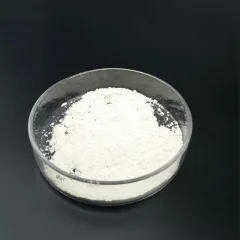
(Spherical Aluminum Nitride)
Round Aluminum Nitride begins with the amazing base material aluminum nitride (AlN), a ceramic understood for 3 standout attributes: exceptional thermal conductivity, electrical insulation, and chemical security. Imagine attempting to cool down a smartphone chip with a product that both pulls warmth away successfully and rejects to carry out electrical power– that’s AlN’s superpower. However raw AlN often comes in jagged, uneven bits, which behave like a pile of rocks: they leave gaps when packed together, deteriorating the final product. Spherical Aluminum Nitride resolves this by transforming those rocks right into completely round grains, comparable to marbles in a container. These rounds load snugly, eliminating spaces, and their smooth surface areas permit heat to take a trip unobstructed. This structural advantage enhances thermal conductivity by up to 30% contrasted to uneven AlN, while likewise improving flow in production– think of it as transforming a rough road into a smooth highway for products.
The magic of Spherical Light weight aluminum Nitride depends on its dual nature. It conducts heat like a steel (about 3 times better than light weight aluminum) however protects electrical energy like plastic, making it optimal for electronics where overheating and short circuits are consistent dangers. Furthermore, its lightweight make-up (just 3.26 grams per cubic centimeter) and resistance to rust make it a favorite in severe settings, from engine elements to ocean-floor sensors. This blend of buildings, amplified by the spherical shape, turns a good product right into a terrific one.
2. Crafting Round Light Weight Aluminum Nitride: From Laboratory to Manufacturing
Producing Round Light Weight Aluminum Nitride is a fragile dancing of chemistry and design, requiring precision at every action. The process generally begins with high-purity light weight aluminum and nitrogen sources, which respond under controlled problems to form raw AlN powder. However this powder is far from spherical– it resembles smashed glass. To reshape it, manufacturers utilize techniques that leverage physics and surface area stress, the same force that draws water into beads. One usual technique is plasma spheroidization: raw AlN fragments are fed into a plasma lantern, where temperature levels surpass 10,000 degrees Celsius. The extreme warmth melts the bit surfaces, and surface stress pulls the liquified material right into perfect spheres before cooling down. Consider it as using a planetary blowtorch to polish crushed rock into beads.
Another strategy is chemical vapor deposition (CVD), where aeriform forerunners of aluminum and nitrogen are heated in a chamber. As the gases respond, they transfer thin layers of AlN on tiny seed bits, progressively accumulating spherical grains. This approach allows accurate control over dimension– from micrometers to millimeters– customizing the powder for specific usages. Spray drying out deals a lower-cost choice: an AlN slurry is atomized into fine mist, which dries out mid-air right into round droplets that solidify into uniform grains. Each technique balances expense, scalability, and bit top quality, but all share an objective: transforming disorderly fragments right into bought rounds.
Quality control is critical. Suppliers examine Round Light weight aluminum Nitride for dimension uniformity (utilizing laser diffraction), purity (via X-ray fluorescence), and thermal efficiency (with laser flash evaluation). A single batch with irregular particles can spoil a high-stakes application, so strenuous checks make sure every grain fulfills exacting requirements. This attention to information is what makes Spherical Aluminum Nitride a reliable selection for sectors that can’t manage failing.
3. Changing Electronics with Round Aluminum Nitride
Electronics create warm like a marathon runner sweats, and excess warm deteriorates efficiency or triggers failing. Round Light weight aluminum Nitride has ended up being the best service for keeping tools cool down, thanks to its unmatched thermal conductivity and electric insulation. In integrated circuit, as an example, it’s mixed into thermal interface materials (TIMs)– the gooey substances that bridge chips and warm sinks. Standard TIMs utilize silicone or metal bits, yet Spherical Light weight aluminum Nitride transfers heat 50% faster, allowing CPUs to perform at greater speeds without overheating. A leading semiconductor business recently reported that using Spherical Aluminum Nitride in its video gaming laptop computer chips reduced peak temperatures by 15 levels Celsius, expanding battery life and element life expectancy.
Light-emitting diodes (LEDs) also benefit exceptionally. LEDs convert most power into light, however 20% ends up being warmth, which can fade shades and reduce life-span. Round Light weight aluminum Nitride is made use of in LED substratums, the base layers that draw heat far from the light-emitting diode. Its shielding homes stop electric leakage, while its round shape makes certain even warm distribution. This has actually allowed brighter, much more efficient LEDs for streetlights and smart device screens, reducing power usage by approximately 30%.
Even versatile electronic devices, like wearable wellness monitors, depend on Round Light weight aluminum Nitride. By installing the rounds in polymer films, engineers create flexible thermal pads that cool down sensors without cracking. This development is pushing the limits of what flexible tools can do, from collapsible phones to medical spots that check sugar levels.
4. Round Aluminum Nitride in Advanced Ceramics
Ceramics are strong however frequently breakable, like a porcelain teacup that shatters if dropped. Spherical Light weight aluminum Nitride transforms that story by toughening porcelains for requiring duties. When included in ceramic matrices, the rounds function as tiny supports: if a crack begins to form, the rigid rounds block its path, soaking up energy and protecting against disastrous failure. This is why Round Aluminum Nitride-reinforced porcelains are used in cutting devices for machining difficult metals– they remain sharp longer and resist wear.
In aerospace, these porcelains beam in engine parts. Jet engines operate at temperatures going beyond 1,500 levels Celsius, where steels soften. Ceramic composites with Round Light weight aluminum Nitride retain strength at such extremes, reducing engine weight by 20% contrasted to steel components. This translates to fuel cost savings for airlines and longer upkeep intervals. A current advancement saw a rocket supplier making use of Spherical Aluminum Nitride-reinforced ceramic nozzles, which endured 50% even more test shootings than previous designs.
Clinical implants are another frontier. Bioceramics made with Spherical Aluminum Nitride are being examined for bone substitutes. Their harsh round surfaces motivate bone cell development, while their chemical stability prevents denial. Early trials reveal these implants integrate with human bone quicker than conventional options, supplying hope for people requiring joint repairs.
5. Powering Tidy Energy Solutions
As the globe shifts to renewable resource, Round Light weight aluminum Nitride is playing a peaceful but crucial function in making systems much more effective. Lithium-ion batteries, the heart of electric automobiles and solar storage space, generate heat during charging and releasing. Way too much heat causes degradation, shortening battery life. Designers currently embed Spherical Aluminum Nitride fragments in battery separators– the slim membranes that keep electrodes apart. The rounds create a thermal path, spreading out warm evenly and avoiding hotspots. A pilot job with electrical buses revealed that batteries with Spherical Aluminum Nitride preserved 90% ability after 1,000 cost cycles, compared to 70% for conventional batteries.
Fuel cells, which convert hydrogen right into electrical energy, additionally depend upon Spherical Light weight aluminum Nitride. In strong oxide gas cells (SOFCs), it works as a porous support framework for the electrolyte. Its high thermal conductivity helps keep the 800-degree Celsius operating temperature, while its insulating buildings keep electrical energy flowing in the appropriate instructions. This has actually increased SOFC effectiveness by 15%, bringing clean power better to taking on nonrenewable fuel sources.
( Spherical Aluminum Nitride)
Solar modern technology advantages too. Spherical Aluminum Nitride is coated onto solar panel reflectors, improving their ability to focus sunshine. The balls’ high melting point (2,200 degrees Celsius) guarantees sturdiness under intense sun, while their reflective surfaces bounce even more light onto solar batteries. This technology could make focused solar energy plants much more economical, particularly in warm areas.
6. Aerospace and Beyond: Lightweight Stamina
Aerospace demands products that are light yet strong, and Round Light weight aluminum Nitride fits the costs flawlessly. Its low density (comparable to light weight aluminum yet with higher toughness) makes it perfect for aircraft elements. As an example, wing flaps made with Round Aluminum Nitride-reinforced composites are 25% lighter than light weight aluminum alloys, reducing fuel usage. Airlines approximate that a 1% weight reduction saves countless bucks in fuel yearly, making this product a financial and ecological win.
Satellites face also harsher conditions: extreme temperature levels, radiation, and vacuum cleaner. Spherical Aluminum Nitride’s stability in these settings makes it a leading selection for satellite structural components. A current Mars vagabond objective used Spherical Aluminum Nitride in its interaction antenna real estate, which kept shape regardless of wild temperature swings (-140 to 20 degrees Celsius). The product’s resistance to radiation also shields sensitive electronic devices inside.
Looking ahead, Spherical Light weight aluminum Nitride might transform room environments. NASA is exploring its use in 3D-printed lunar bases, where the balls would certainly supply structural assistance and thermal regulation in the moon’s severe day-night cycle. Such applications highlight just how a tiny spherical bit can assist humans grab the celebrities.
In conclusion, Spherical Aluminum Nitride is far more than a specialty powder– it’s a keystone of modern-day development. Its spherical structure intensifies the natural strengths of aluminum nitride, fixing challenges in electronic devices, power, and aerospace that as soon as seemed insurmountable. From cooling down the chips that power our digital lives to allowing cleaner energy and safer trips, this material is quietly shaping a more reliable, resistant world. As technology remains to evolve, Spherical Aluminum Nitride will remain at the center, verifying that in some cases, the tiniest forms make the most significant influence.
7. Distributor
TRUNNANO is a globally recognized 2024 aluminum manufacturer and supplier of compounds with more than 12 years of expertise in the highest quality nanomaterials and other chemicals. The company develops a variety of powder materials and chemicals. Provide OEM service. If you need high quality 2024 aluminum, please feel free to contact us. You can click on the product to contact us. Tags: spherical aluminum nitride, Aluminum Nitride, al nitride
All articles and pictures are from the Internet. If there are any copyright issues, please contact us in time to delete.
Inquiry us